Picture Credit: Netflix
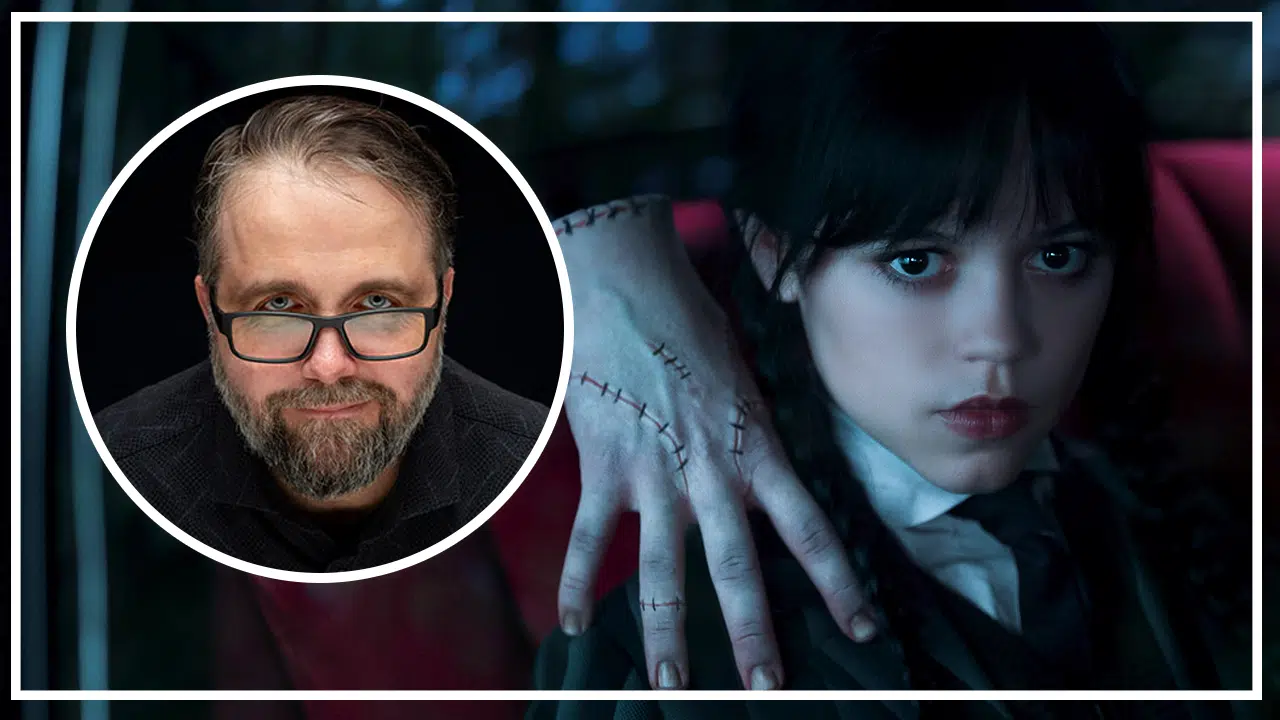
Sound editor John Loranger is one of the artists responsible for bringing the monsters to life in creators Alfred Gough and Miles Millar’s Wednesday. Loranger – who’s been in the sound business for 25 years – creates, sources, and manipulates sounds for Nevermore and beyond. For the sound editor, creatures such as the Hyde and Slurp represent a series of imaginative possibilities.
Loranger, like producer and director Tim Burton, is not only a monster fan but creator. “Doing creature sound design is one of the most difficult but rewarding things that you get to do,” Loranger told What’s on Netflix. “On Wednesday, having different creatures and creatures we’ve never seen before, like from the imagination of Tim Burton, it’s a lot of fun. It always allows you to flex your sound design muscles and get your hands dirty because it’s really difficult to make those things feel real. I love creature sound design. I would do it all the time if I could.”
Recently, the Emmy-contender spoke with What’s on Netflix about the real-world influences that shape the monstrous sounds.
When it comes to Wednesday’s point of view, how does the way she perceives the world influence your approach to how she hears it?
When I think about Wednesday’s point of view, and the way Jenna presents the character with Tim’s direction and Miles’ direction, we try to treat her performance as the bass. Wednesday’s very controlled and Jenna’s performance is very understated. We’re focusing the sound around her performance, keeping it understated while making sure we’re punctuating the right moments.
In season one, the character really evolved for Jenna as she went through developing the character, so towards the end, it was completely fully formed. And so for season two, we were able to start off from that position and hone in on what we wanted to feature. Wednesday’s dorm room – that’s a space that is dynamic and actually changes. We change the sound of that space depending on what’s happening in the scene and what Jenna’s performance is like.
How so?
She does a lot of really subtle things with her face, so we follow those cues there. If she’s in a scene with Enid (Emma Myers), it’s much more bubbly and we’ll take out the creeks and the hollow wind out of the window. It’ll be a bit more bright and sunny feeling as opposed to doom and gloom, gothic, nevermore.
What does doom and gloom typically entail for you at Nevermore? What sounds do you heighten for a gothic effect?
We have a rule pretty much at Nevermore about birds [Laughs]. Miles, our showrunner, is not a fan, especially of happy birds. Occasionally I try to sneak them in if they’re justified.
The exterior is very stark and we have the occasional raven, kids coming in the quad or whatever. That’s the general vibe, being very stark and ominous at times, especially at night. We’re playing it very isolated. The school is not near anything, so we don’t have any reference point for trains or traffic. There is nothing exterior sound-wise bleeding into the nevermore environment.

Wednesday. (L to R) Thing, Christopher Lloyd as Professor Orloff in episode 206 of Wednesday. Cr. Courtesy of Netflix © 2025
What’s On Netflix recently ran an interview all about creating a Hyde. How much discussion do you have with the VFX supervisor about the weight, scale, and the interior when you’re working on the Hyde or any other monster for the series?
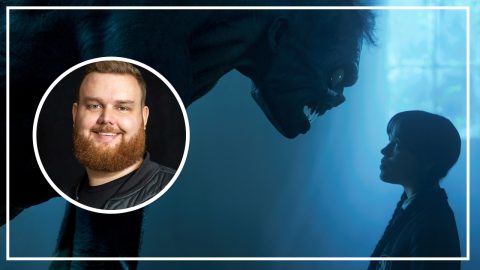
We definitely have those types of conversations early on, especially in season one when Hyde first appeared. We were trying to figure out how big he was. How much does he weigh? We’re looking to add weight.
Particularly for Hyde, we don’t lean on foley at all there. I design all the footsteps mostly because the foley guys can only do so much, right? They don’t weigh 600 pounds. Even though they can make animal and creature footsteps to add that kind of weight, I’ve got to do it in design.
When Tyler (Hunter Doohan) is the Hyde, what are his vocalizations going to be like? I spent a lot of time in season one building the library up of what the Hyde will sound like and what sources that I went into. I really lean towards natural organic sounds, especially when trying to get a creature to come alive and feel real.
Do you source any animal sounds?
A lot of my creature design is sourced and based on animal sounds. I’m slowing them down, I’m stretching them. And then you’ve got to make them match the performance, right? And so in season two, there’s a lot more subtlety in Hyde’s performance because there’s a lot of close-ups. There’s the breathing, the looks, and the interactions between Marilyn (Christina Ricci) and Tyler.
And so, I had to build on the library from season one and expand it. I’m looking for grunts that are emoting. He’s looking at Wednesday and he’s got to breathe in a certain way that it’s not just a breath; it’s got to be a frustrated breath or an angry breath. I’m trying to keep up with VFX as far as the detail that they’ve added to his face.
How do you emphasize pain for the monsters in the sound? Do you seek out more vulnerable sounds, even for the ghastliest creatures?
For sure. I can remember in season one I sourced a library from a slaughterhouse specifically. I was looking for pain, injecting that into the sound. Unfortunately, that’s a very effective place to hear the sounds of pain.
I’m always looking for those types of genuine sources of emotion. You can create some of those sounds from screeching metal and twisting stuff and performing it and trying to get there. Certainly, there are elements of that in the Hyde, but for the real base of the emotion, I’m looking for real world sounds that I then stretch and manipulate and fit into the mouths of the creatures.
What were some sounds that you were stretching and manipulating for like Slurp?
Slurp was quite a challenge. I didn’t really know what it was going to look like until I started to see the dailies come in. Slurp is made out of me. It’s made out of loop group. It’s made out of the actor’s performance. It’s made out of some creature sounds. It’s made out of multiple layers of gore, bones, seashells, goo, all sorts of stuff.
One of the notes that I got from Miles actually was that he didn’t want this zombie to be a zombie that we had heard before. From a sound design perspective, it was a real challenge to be like, “All right, I’ve got to make a zombie, but it can’t be a zombie that we’ve heard.” Miles wanted me to create somebody new. We fully formed the character at the end of episode one and then episode two, it changes.
He’s growing, he’s feeding, he’s eating brains, he’s reanimating. I think I started with about 50 tracks of layers, then I was able to slowly reduce the amount of goo and gore and bone cracks and creature sounds. And then that was the plan was to have that slowly evolve over the six episode arc where it becomes fully human again. We slowly reduced those layers and Jamie Sulek, the effects mixer, and I worked together on weaving in and out how much of the zombie we still hear. When does a human element come in?

Wednesday. Fred Armisen as Uncle Fester in episode 204 of Wednesday. Cr. Jonathan Hession/Netflix © 2025
What does foley day look like when Slip’s eating brains?
Miles and Tim wanted that whole part of when he’s eating people and eating their brains and killing them to be gory and nasty and visceral. The practical stuff when we see it is: goo, guts, and juicy foley stuff that they’re making with their hands. They’re squeezing meat and whatever and close mic-ing it. I’m adding layers of crunch and the bites and then slurps.
Every time Slirp went to bite somebody his jaw would dislocate first, so he could really get a big chunk. We worked on the dislocation sounds, breaking little bones and tearing flesh. So that’s the foley team, they do their thing. We work with this great foley team, Q5, Randy Wilson and his group.
Another fantastical creature that I imagine you have less of a library for is Professor Orloff (Christopher Lloyd). How do you make a character that fantastical grounded through sound?
We had discussions with Alan Miles and Tim about, well, how are we going to play this? Is it going to be an underwater voice? There is a speaker on the front of his vehicle, right? It’s this busted speaker. We took the approach of putting his head in the jar underwater but then being amplified through this speaker.
Mike Baskerville, our lead mixer, this is a real challenge for him. Dialogue clarity is always super important for us. Mike wanted to be in a position where he created the sound for Orloff, but then he could also reduce the treatment on the fly if needed. Sometimes dialogue requires you dipping out of treatment where the line isn’t quite so clear. So, it was a delicate balance of keeping the treatment, getting the slosh in there with the sound effects in the foley, getting the bubbles while maintaining the clarity and having it amplified through this speaker.
Tim Burton is obviously renowned for his visual storytelling, but how’s his ear for storytelling?
Tim’s eye is in sync with his ear. When he’s creating a world, he’s also hearing it. He has a very clear vision about what it is that this world is going to sound like and he’s very articulate about letting you know what that is. We worked through season one and season two. In season one, there was a bit more of a learning curve because none of us had worked together before. We learned Tim’s style and his approach.
These are really treated like little movies. We’re not treating them like episodic serial TV as far as the sound design and the mix is concerned. We’re really focused on delivering a feature track. I mean, we’ve got a full orchestral score. Tim is leading that and notes from him are, they’re about tone. He’ll come in for a playback and he’ll have an issue with a scene and it won’t be like, “Well, that footstep over there is a problem.” It’ll be like, “The music and the sound effects and the dialogue are not in sync and the way I’m hearing it. Maybe shape this, turn that down, let’s focus on this, reshape the thing, lose the loop group,” whatever it is. His notes are holistic as opposed to nitpicky.
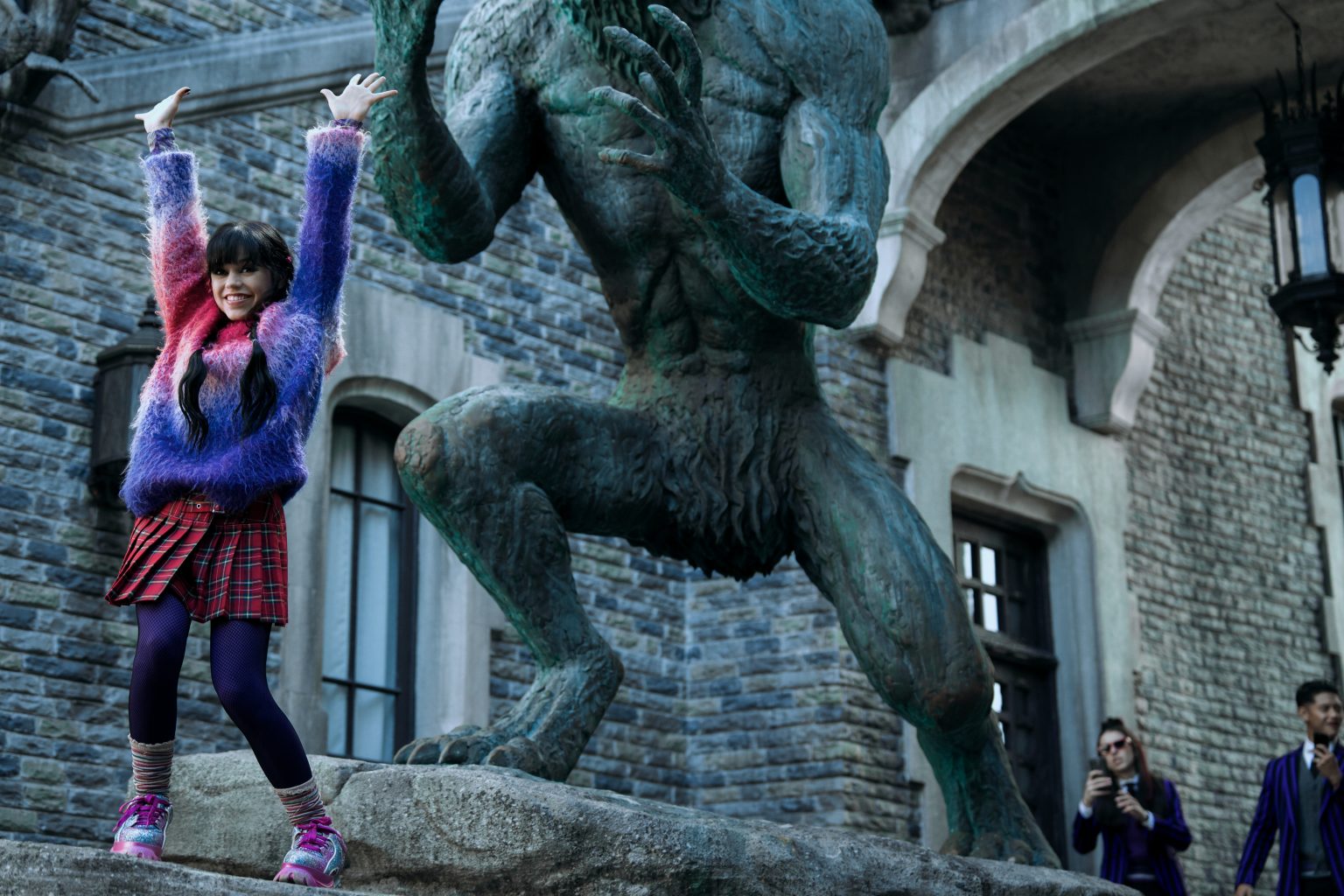
Wednesday. Jenna Ortega as Enid in episode 206 of Wednesday. Cr. Bernard Walsh/Netflix © 2025
We’ve covered monsters, but how about the comedy on Wednesday? Specifically, Uncle Fester (Fred Armisen). How does his world sound?
He’s jumping out of a tree and we’re making a really big sound to punctuate his comedic moment. But a lot of the comedy is in the original performance. Even if we’re having trouble with clarity and that type of stuff, we really lean towards not ever replacing the original performance because that’s the take that’s been selected. It’s the funniest, so it’s our job to really create the space for it. And so, we’re using negative space. We’re leaving a brief moment of silence before something, before zap, before whatever, to punctuate and support the performance as much as we can, but it presents all sorts of opportunities for us, right?