
Picture Credit: Netflix
With its new season centered on Lizzie Borden, Ryan Murphy and Ian Brennan’s Monster anthology has already reached its fourth chapter. After Jeffrey Dahmer, the Menendez brothers and Ed Gein, the series is putting a female killer center stage for the first time.
Four seasons, four notorious cases and enough murder, bloodshed and misery to give even the most seasoned true-crime fan a few sleepless nights. But which season left the biggest mark? Which one stands head and shoulders above the rest? And where did the Monster formula first start showing a few cracks? Here’s our ranking of all four seasons of Monster, from weakest to strongest.
The Lizzie Borden Story

Picture Credit: Netflix
Someone has to finish last, and that dubious honor goes to the newest installment, The Lizzie Borden Story. That certainly doesn’t make it a bad season. Far from it. There are plenty of strong moments, and this time Murphy and Brennan throw several infamous female killers into the mix. Eileen Wuornos appears, as does Elizabeth Báthory.
Much like The Ed Gein Story, the season takes plenty of creative liberties with the facts. Rather than simply telling Lizzie Borden’s story, it also tries to explore the influence her case had on serial killer Eileen Wuornos.
Wuornos ends up playing a surprisingly prominent role in the season and, ironically, her storyline is one of its strongest. A lot of that is down to Sarah Paulson, who is phenomenal in the role. The only problem? It has very little to do with Lizzie Borden. In fact, by the time those scenes really get going, you start to wonder whether Monster should simply have given Wuornos a season of her own. Judging by what we get here, there is certainly enough material for one.
As a result, the whole thing doesn’t always hang together as neatly as it should. The series occasionally seems just a little too desperate to connect every dot on the murder board, whether those dots really need connecting or not. In doing so, it loses some of the raw immediacy that made the first two seasons so effective.
Still, Monster is clearly nowhere near running out of steam. Even when it misses the mark, there is enough craft here to put it comfortably above a sizeable chunk of Netflix’s output. Groundbreaking, though? Not this time.
The Ed Gein Story
Picture Credit: Netflix
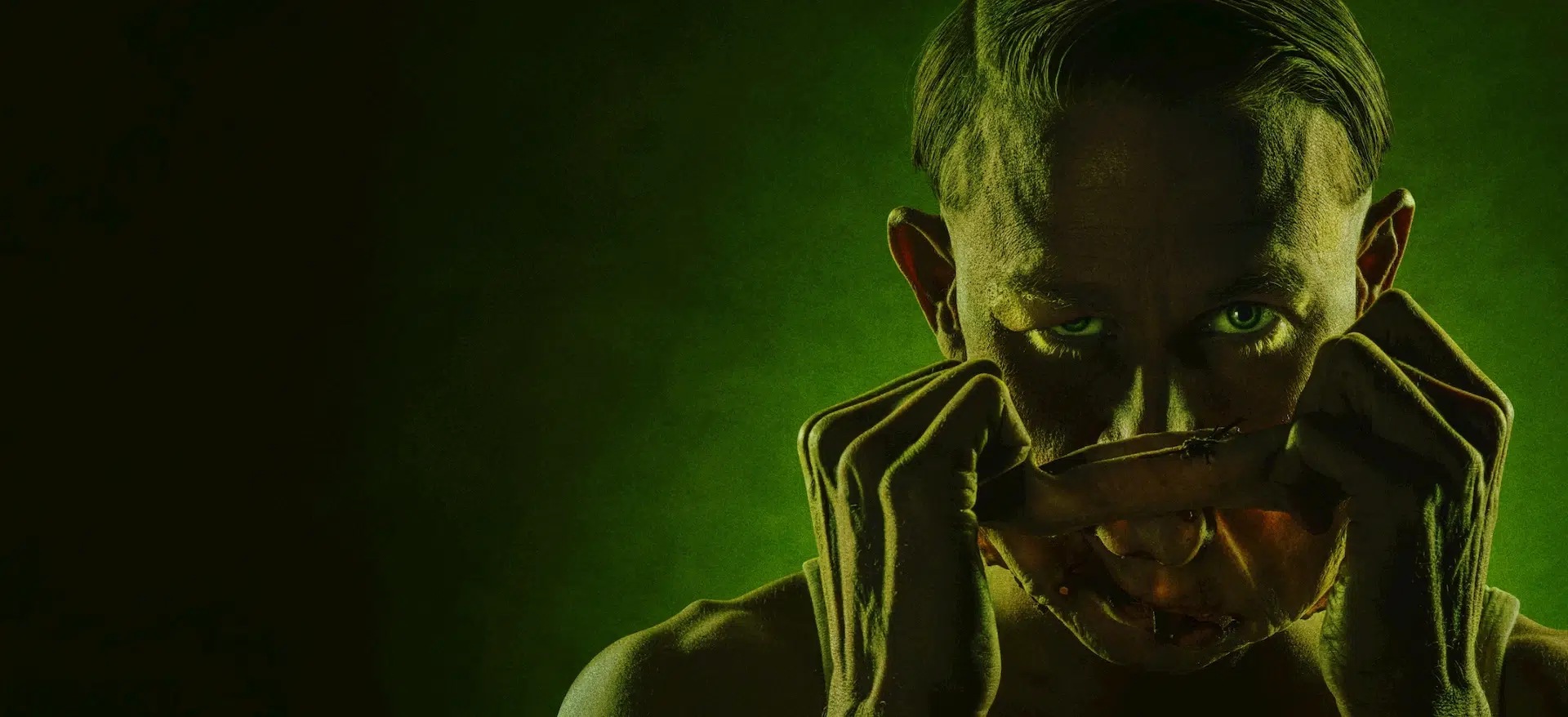
With The Ed Gein Story, the writers apparently decided that reality simply wasn’t strange enough. The story of Ed Gein, the infamous ‘Butcher of Plainfield’, takes several sizeable creative detours. Those choices sparked plenty of debate when the season arrived, but one thing is difficult to argue with: Charlie Hunnam is superb as Gein.
Even his peculiar vocal performance became a talking point, but Hunnam succeeds in making Gein deeply, relentlessly uncomfortable to watch. And in this particular case, that is very much a compliment.
The third season is also less interested in Gein’s crimes themselves than in the enormous shadow they cast over popular culture and cinema. From Psycho and The Texas Chain Saw Massacre to Alfred Hitchcock, the series draws all manner of connections between Gein and the horror that followed in his wake.
It makes for fascinating television, but it also means the season occasionally wanders rather a long way from the man whose name is on the tin. The real story of Ed Gein is already horrifying enough without much embellishment, and there are scenes here that genuinely get under your skin. Yet the season never quite lands the same sledgehammer blow as its two predecessors. Strong? Absolutely. Unforgettable? Not quite.
The Lyle and Erik Menendez Story

Picture Credit: Netflix
After the enormous success of Dahmer, the bar could hardly have been set any higher. The Lyle and Erik Menendez Story cleared it with surprising ease. The second season proved to be a remarkably strong follow-up and generated plenty of noise beyond Netflix itself. The case of Lyle and Erik Menendez was thrust firmly back into the spotlight; Netflix released a separate documentary about the brothers, and debate surrounding their convictions and possible release flared up once again.
Strip away all that outside attention, though, and it is the acting that really pushes this season into another league. Cooper Koch and Nicholas Alexander Chavez carry the series effortlessly. Koch, in particular, gets one episode in which he is allowed to throw absolutely everything at the screen. The lengthy conversation between Erik and his lawyer Leslie Abramson, played by Ari Graynor, unfolds largely in one extraordinarily long take and ranks among the most impressive sequences Monster has produced.
Where Dahmer could make you feel almost physically uncomfortable, season two goes about things differently. It is less gruesome, less explicit, and less interested in outright horror, yet emotionally it hits every bit as hard. The performances are exceptional, virtually every episode brings something worthwhile to the table, and the series once again managed to drag a decades-old case straight back into the centre of public debate.
Most importantly, it never feels like an attempt to simply make Dahmer again. It finds an identity of its own. Exactly what Monster needed.
The Jeffrey Dahmer Story

Picture Credit: Netflix
The Jeffrey Dahmer Story remains the season every subsequent chapter of Monster has been trying to measure up to. Rarely has a series left you feeling quite so desperate to do literally anything else after an episode. Put on a mindless sitcom. Walk the dog. Stare blankly out of a window for twenty minutes. It really didn’t matter, as long as it involved absolutely no more Jeffrey Dahmer. That is how hard this season could hit.
The series went remarkably far in depicting Dahmer’s crimes and, crucially, their consequences. Not because every other scene involved buckets of blood splattered across the walls, but because of the suffocating atmosphere and the constant awareness that there were real victims and grieving families behind this nightmare.
Perhaps even more importantly, the story remained relatively focused. There were no endless detours involving other serial killers, no increasingly elaborate flights of fancy and no desperate attempts to connect everything to everything else. Dahmer felt raw, restrained and horribly close to home.
Evan Peters was phenomenal. His performance was frightening, deeply unsettling and yet another reminder of just how much range he has as an actor. Richard Jenkins also impressed as Jeffrey’s father, Lionel Dahmer, while Niecy Nash delivered one of the season’s standout performances as neighbour Glenda Cleveland. Through her perspective, the series drove home just how many warning signs there had been, and how many of them were never taken seriously enough. The result was television you probably wouldn’t choose to stick on over dinner, but it stayed with you long after the credits rolled. And that is something the later seasons have managed less and less.
Is Monster Starting to Crack?
Monster is still very much alive and kicking, but after four seasons, a few cracks are beginning to appear in the formula.
From The Ed Gein Story onwards in particular, Ryan Murphy, Ian Brennan and their team seem increasingly determined to think beyond the case itself. More creative liberties are being taken, different killers and periods are being stitched together, and the boundaries between fact, interpretation and outright invention are becoming increasingly blurred.
Sometimes that produces fascinating television. At other times, it feels as though somebody in the writers’ room spotted an empty bit of space on the board and simply couldn’t resist adding one more piece of string. That is why the first two seasons still stand above the rest for me. They were rawer, more direct and, above all, more impactful. Dahmer became a genuine Netflix phenomenon, while The Lyle and Erik Menendez Story proved that its success had not been a one-off.
That certainly doesn’t mean seasons three and four are poor television. Not even close. Even when Monster is operating below its best, it remains the sort of series Netflix can comfortably put front and centre. But that enormous hype? The office conversations? That peculiar feeling that seemingly everyone you knew was watching the same deeply disturbing series at exactly the same time? Monster hasn’t quite reached those heights again since the Menendez brothers.
Now we wait to see what a potential fifth season pulls out of the murder drawer. Whoever gets their turn next, hopefully Murphy and his team will stick a little closer to the facts. Because if four seasons of Monster have taught us anything, it is that reality is usually bizarre, horrifying and fascinating enough without much help from the writers’ room.