Picture Credit: Netflix / Getty Images
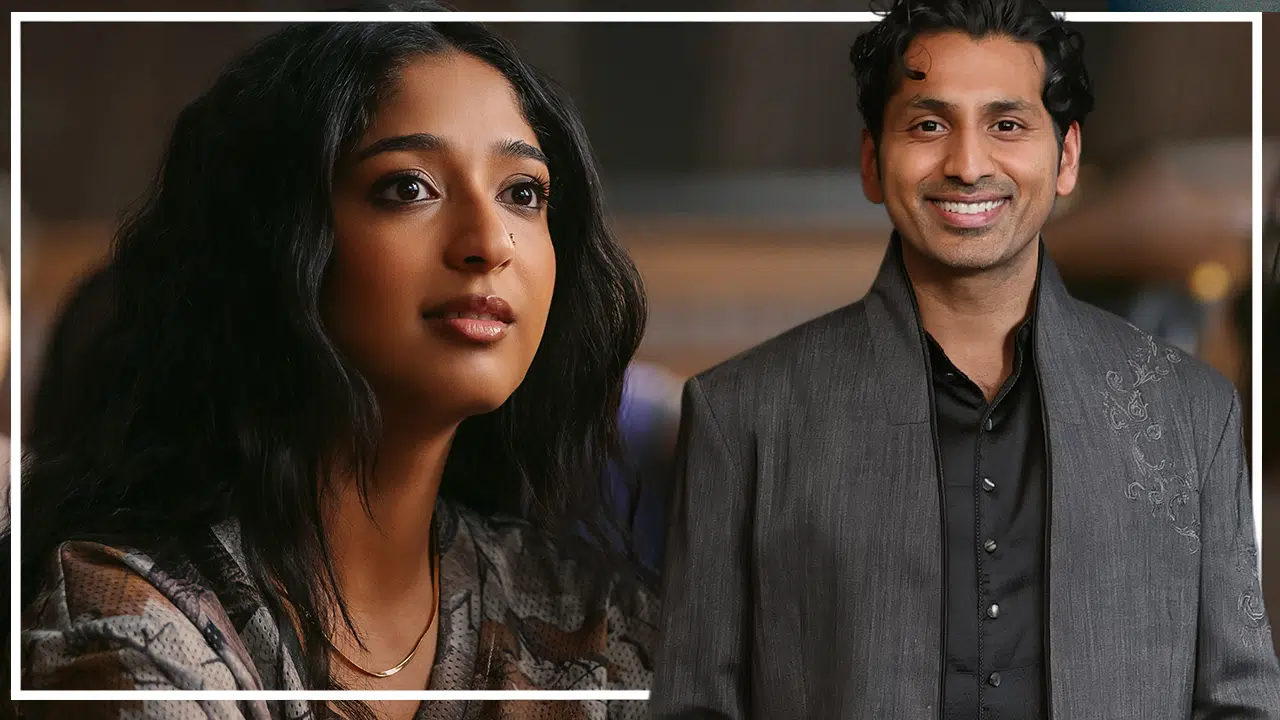
Prashanth Venkataramanujam would teach a hell of a screenwriting course. The co-writer behind Best of the Best knows good structure. That skill is on full display in the film, which in short, is a competitive dance story set at a university and following two best friends, Maya (Maitreyi Ramakrishnan) and Anjali (Priyanka Kedia).
Dances tell and progress the story while defining the characters in the film by Lena Khan.
It’s a movie that moves naturally through the college and sports movie formulas. The familiar is natural here. Venkataramanujam co-wrote the script with his Patriot Act collaborator, Hasan Minhaj. Recently, What’s on Netflix had time to sit down with Venkataramanujam and hear about how he approaches screenwriting.
The dances in Best of The Best are almost structured like action set-pieces. How’d you want to dance and movement to deepen character and story?
You don’t want these sequences to feel frivolous. I think the audience can tell when you’re just trying to jingle keys in front of them and it doesn’t feel like there’s any nutrition.
It is really complicated, actually, because one thing that’s happening with the movie is there’s the journey that the characters are going on in their lives, right? And then there’s a story that’s actually happening within each routine, right? Each dance routine, the way these competitions are structured and the way these routines play out, is each team is doing a routine that has a theme and has a little mini arc.
And so you need to make sure that those two layers of whatever the story is, the little mini story that’s happening in the routine itself in the movie, has some import into the actual character’s journey that’s happening outside of that routine.
These two things can’t be disconnected. They have to always be touching. The way I think about it is like an old Swiss watch. You’ve got a larger gear that is your character that is turning and has to actually make movement, has to have forward progress. But each dance sequence is like a mini gear that is connected to the larger gear. When that gear turns, it actually also turns the story gear of your main character.
And so, in its contained world, it’s its own little gear, and it has to have all the grooves and it has to have all the architectural design of a gear, but it’s smaller and it affects the larger gear. But it can’t take over the job of a larger gear.
They always have to be in contact. The teeth always have to be touching, and they have to always be affecting one another.
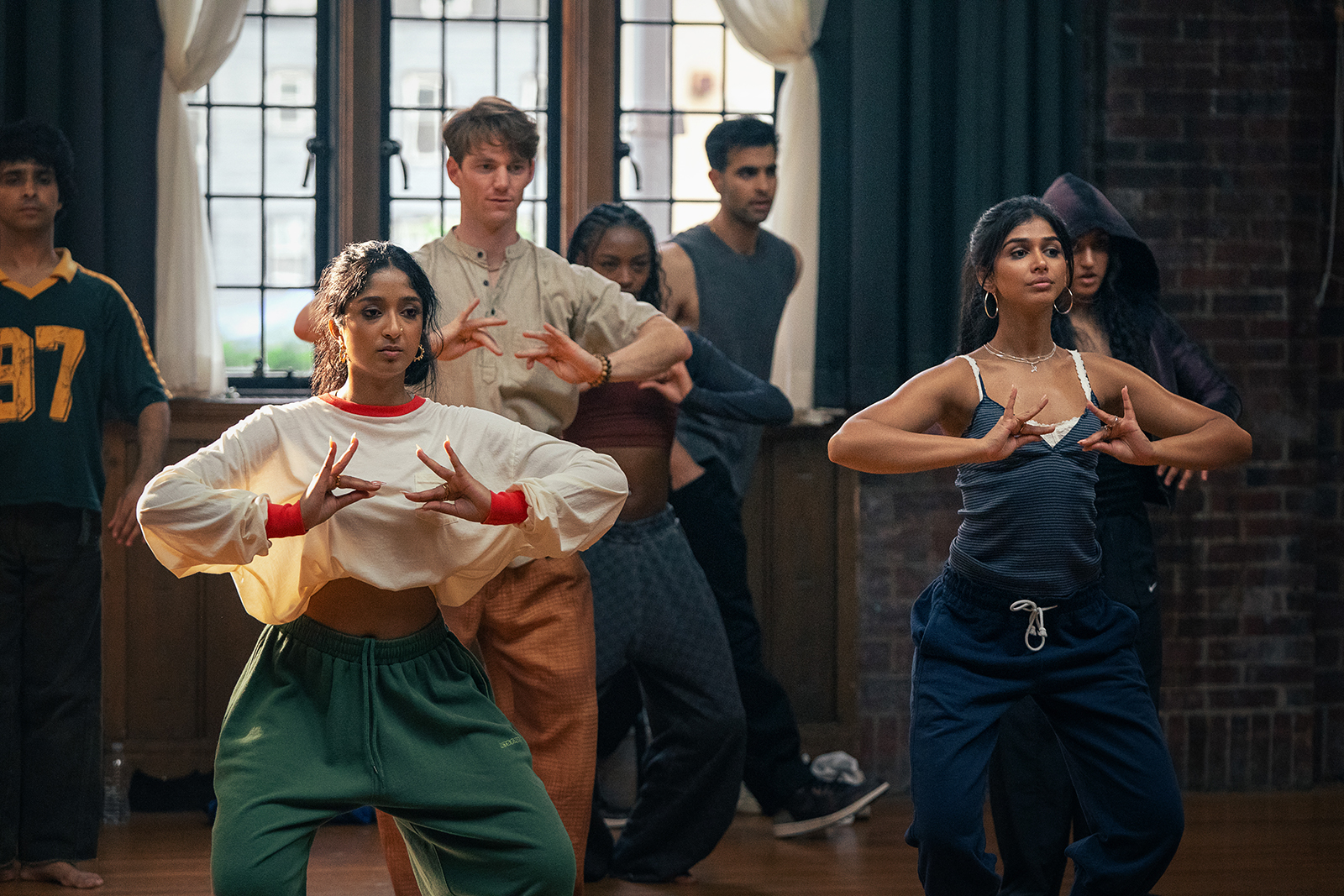
Best of the Best. (L to R) Maitreyi Ramakrishnan as Maya, Nico Greetham as Harry, Ankur Rathee as Ronak, Priyanka Kedia as Anjali, Amryn Khurana as Sumi in Best of the Best. Cr. Emily V. Aragones/Netflix © 2026
I like that metaphor a lot. For you and Hasan, how much do you both obsess over structure, whether it is of a scene, a joke, or the bigger picture?
Structure’s a tricky one in screenwriting. At the end of the day, all story, all poetry, it is structure, right? Poetry takes its form through its structure. But within the structure, there needs to be jazz. There needs to be the ability to paint outside the lines. Because if you have a story that has solid macro structure, but it also has really meticulous micro structure, then the whole thing starts to feel a little rote.
I think the art of screenwriting, particularly moviemaking, is making sure you don’t lose sight of your macro structure, especially with this movie because it has two principal lead characters, and they both have arcs that are touching. What happens with one character can’t happen in isolation.
For example?
With Anjali, whatever happens to her, whatever action she takes needs to affect Maya and vice versa. You always want to make sure that there’s room to play within scenes, and you’re not being too rigid. You want to make sure that there’s room for jokes, and there’s room for improv, and there’s room for actors to bring themselves to the part. You don’t want to suffocate that.
But at the same time, you know your ins and outs for a particular story beat because you know you need to cover this ground. You know what I mean? And so, that’s why the way I would think about it: you need to be pretty mindful of your macro structure. What story am I telling? Whether it’s one character, two characters, an ensemble, how are they affecting one another?
Is the amount of pages that I’m dedicating to this particular plotline enough? Or am I shortchanging it because I’m trying to cram too much stuff in? That’s all really important. You can’t get around that. Movies that fail, and writers that fail to pay attention to that, oftentimes only realize their mistake once the movie’s airing in front of an audience.
But when you’re shooting on the day of, you have to be extremely loose with the page. You have to let people bring themselves to it. And that’s where I think it’s sometimes hard because someone who’s really good at structure wants structure all the way down. And someone that’s really loose and wants to play jazz all the time wants to play jazz all the way up. But in reality, it needs to be kind of a perfect merging of these two approaches if you’re going to actually have a mainstream picture.
Any parallels between dance and writing for you?
Very much so. I think all art, especially with dance and writing, starts from a place of wanting to say something, and then through the process of dance and writing, figuring out exactly how you want to say that thing.
I’m not a dancer, but I’ve spent a lot of time growing up around dancers, and I got to spend a lot of time with choreographers on this project. Getting to see their process and getting to watch how they discover whether or not something feels right or something doesn’t feel right was fascinating, because it’s so similar to writing in that way where you’re sitting there, you’re thinking about what you want this moment to be or what you feel this character would do in this moment.
You have this toolkit in your mind. This toolkit consists of the thousands of scripts you’ve read or the thousands of movies you’ve seen, and the different moves that happen from a craft standpoint, and you’re trying to figure out, does that movement or motion apply in this moment?
Is that the movement that that particular character needs to express themselves in that moment? One of the things I think a lot about with character and writing is making sure every time a character says something or does something, that they can only say that thing to that other character in that moment at that time.
If what they’re telling that character on page 50 is also something they could be telling that character on page 20, then you’re not doing it right, because you have not created the circumstances that force that character to only be able to say that confession or that reveal to that person at the midpoint or whatever.
I think the same is true of dance. What I’ve seen really great choreographers do is a particular movement can only be that movement at that part of the dance. If it’s coming earlier, it may not fit right. If it’s coming later, it may not fit right, but it needs to fit in that moment. And I think there’s a lot of feeling their way through that to figure out if that is the right thing for that moment.
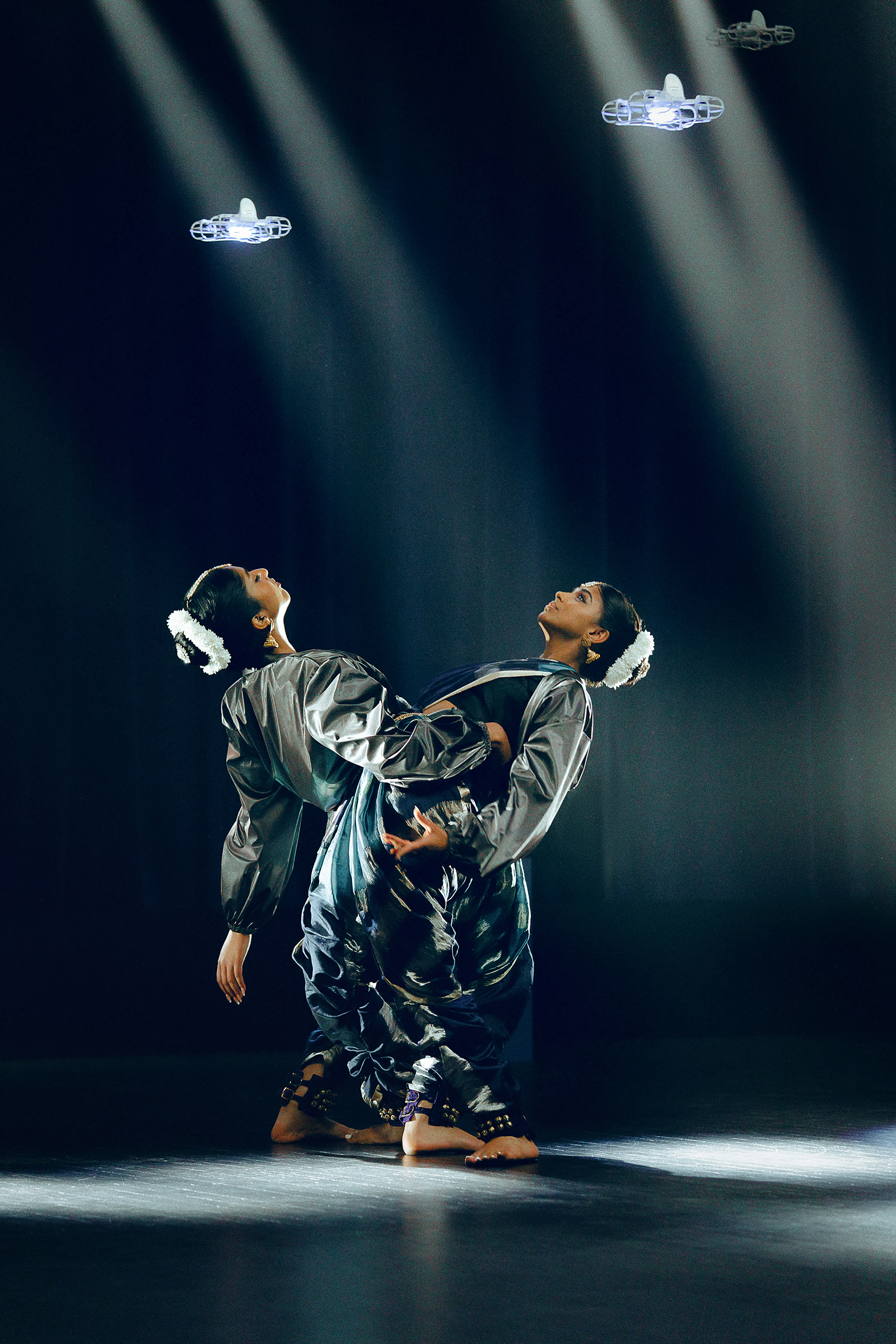
Best of the Best. (L to R) Maitreyi Ramakrishnan as Maya, Priyanka Kedia as Anjali in Best of the Best. Cr. Amir Hamja/Courtesy of 186k Films
There is a sincere love of dance in this movie. Since you’re not a dancer, who were you speaking with? Who was inspiring how you wrote this world?
This circuit, this dance circuit, goes back decades. Kids in college have been competing through these various dance styles since the ’90s. So, I grew up with a lot of women that grew up doing specifically classical South Indian dance called Bharatanatyam. And this is a dance practice that they would do after school and on the weekends for years, starting from when they’re five or six. It’s a way for them to stay close to their culture, their heritage. Oftentimes, it’s something their parents are wanting them to do as well.
So when I was doing research for the film, especially because the two main protagonists are young South Asian women, I just interviewed a ton of the women I grew up with that did this dance before we even started putting the characters together or anything.
I just wanted to hear about their experience. I conducted interviews, something close to 20 to 30, over the phone whenever I could get time. What did dance mean to them? How did it integrate itself into your life? What were the kind of relationships you formed with your fellow dancers?
I grew up in the Chicago suburbs, so a lot of these South Indian kids, and Indian kids in general, went to different high schools, but on the weekends, we’d see each other at cultural events or at family parties. So it was weird, you had your friends from high school that you went to during the week, but then on the weekends, you had a whole other group of friends that you would meet up with, that you’d see maybe once or twice a month.
And so, it became this thing where a lot of times these women would have these friendships that spanned these years, but they never were actually a part of each other’s daily lives in that way. It was a very interesting education in finding out what friendships stuck and why, and what intimacy developed between the people you saw on a daily basis and the people you only saw on a monthly basis.
So it’s a long-winded way of saying a lot of research with the core demographic, so to speak, of my friends who grew up doing this kind of dance, and hearing their stories and trying to make the movie as authentic as possible.
Given your writing history and the projects you’ve worked on, it makes sense that you’re a hardcore researcher.
Dude, I can’t even tell you. That is kind of how my brain works post-Patriot Act, especially, because every week, trying to get that show going, you’re reading 200-page research documents. You’re finding these beautiful little nuggets that appear on page 75 or page 120, and that ends up being the crux of the episode, this weird little detail that you never realize would be the thing that kind of cracks open the episodes on cruise ships.
In a lot of ways, that was kind of the process with the movie, just wanting to get reams and reams of information together, and then starting to be able to look at, oh, what are the patterns that I’m seeing in this experience? What are the anxieties that keep coming up amongst all my friends that went through this?
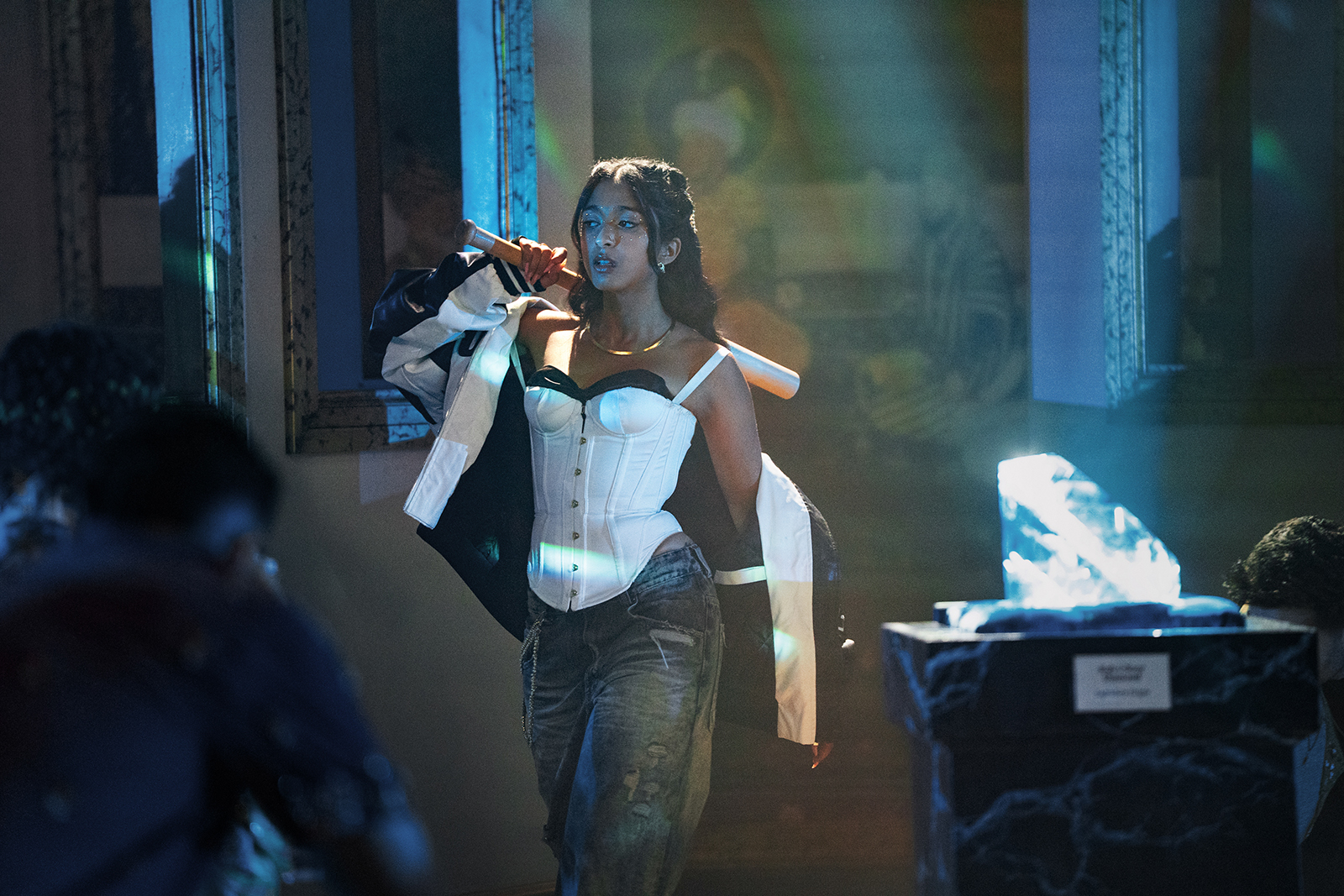
Best of the Best. (L to R) Maitreyi Ramakrishnan as Maya in Best of the Best. Cr. Emily V. Aragones/Netflix © 2026
Have you thought for the future, “Hey, we can really show these characters grow up through dancing and just where they can go. They can go international or they can go to so many different places.” Have you thought about spending more time with these characters in sequels?
Look, you want to see whether or not the audience really connects with the material of the world first, but I’d be lying if I said that I hadn’t thought about that. Because the other thing, too, when you think about the “international side” of things, the thing that’s important to remember is this world and this movie is primarily focused on a South Asian diaspora cultural phenomenon, right? This Bollywood dance circuit is a way for kids, oftentimes the kids of immigrants from South Asian countries, to feel connected to their culture.
And the way they express that is very different from the way that kids who grow up in Pakistan or Bangladesh or India grow up needing to feel connected to their culture. When you grow up in those countries, your culture is all around you. You’re not the minority. You are the majority by a pretty huge amount. And so, what form your cultural expression takes on and how you feel you need to stay connected to your culture just feels very different.
I’ve often thought about, what would an international competition look like between South Asian dance crews who come from South Asia versus North America or Europe even? And how those different cultures express themselves, how those different diaspora cultures express themselves versus homeland cultures where these kids grow up saturated in it and don’t necessarily feel the need to join a dance team to feel close to their culture because they get it when they go home, they get it when they go to the cafe, and they get it when they go to the movie theaters.
So, you have definitely thought about sequels. I’d like to see that story you’re describing.
Well, tell Netflix.