Photo by John Nacion/Variety via Getty Images / Netflix
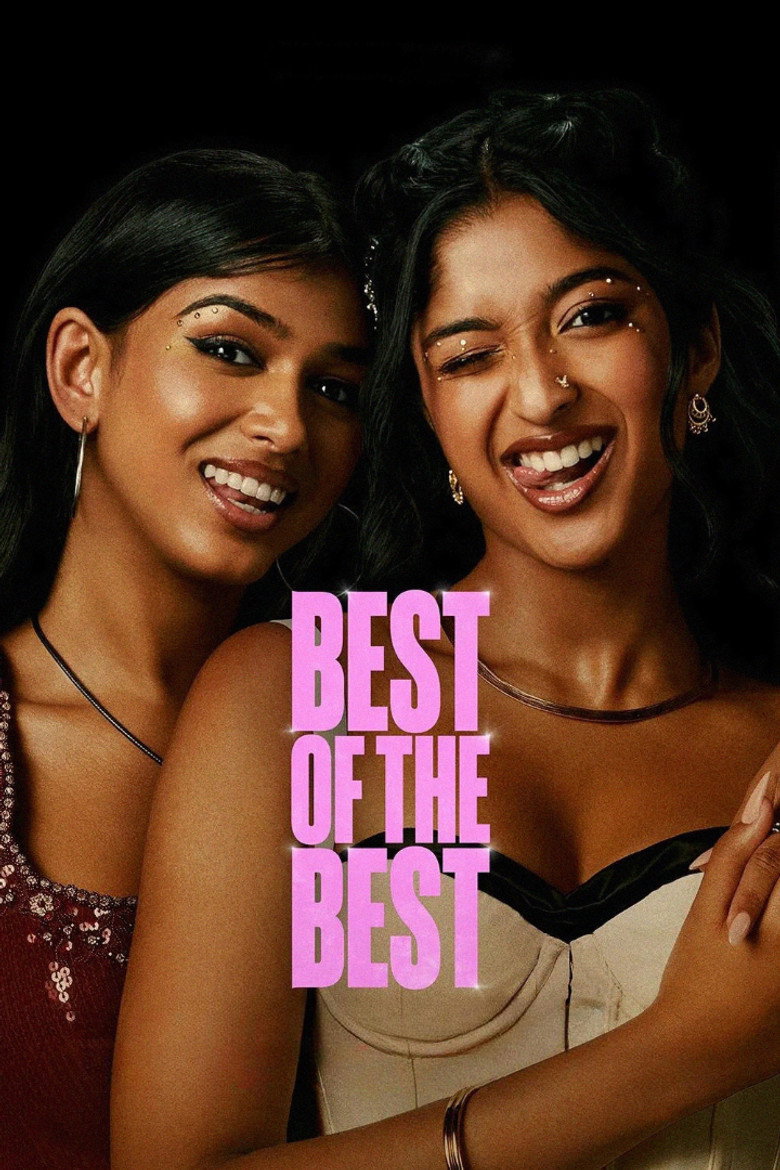
Daniel Rojas wanted to tell a story of friendship. That was his main goal with scoring Best of the Best – a college sports comedy about two friends in collegiate Bollywood dance competitions. Throughout the comedy, the bond between Maya (Maitreyi Ramakrishnan) and Anjali (Priyanka Kedia) mastered most to Rojas.
“I wanted to make sure that we captured some of their emotion,” he told What’s On Netflix, “and the importance of friendship. The friends that come from childhood that they’re going together with become your closest people.”
Rojas, who previously scored Hit-Monkey and contributed to songs for KPop Demon Hunters, recently spoke with What’s On Netflix about scoring the dance comedy.
What are you looking forward to seeing with the crowd at the premiere?
I’m very curious to see how people react, if they get emotional, if they laugh, if they’re excited. So I’ll probably be side-eyeing most of the time.
Do you have a general philosophy for how you want to convey emotion, things you want to do or don’t want to do, or does it depend on the project?
I think it depends on the project for sure. I know that’s a bit of a cliché answer, but yes, I think it depends on the project, both on the project itself and also on your filmmaker. Every filmmaker has different tastes and different directions of where they want to take the score.
But, in general, the job itself doesn’t change, which is that it should enhance the needs of the story. Scoring is different from writing songs in the sense that the music is not the final product. The final product is the movie. The music needs to serve the movie first, and that’s the most important thing.
Sometimes that means taking a little step back or finding space for more silence, letting it breathe. One of the things that I love about scoring is that you need to be conscious about how your music is not just working musically, but also how it’s working against the picture and in the context of the whole story.
How’d the dances influence your score?
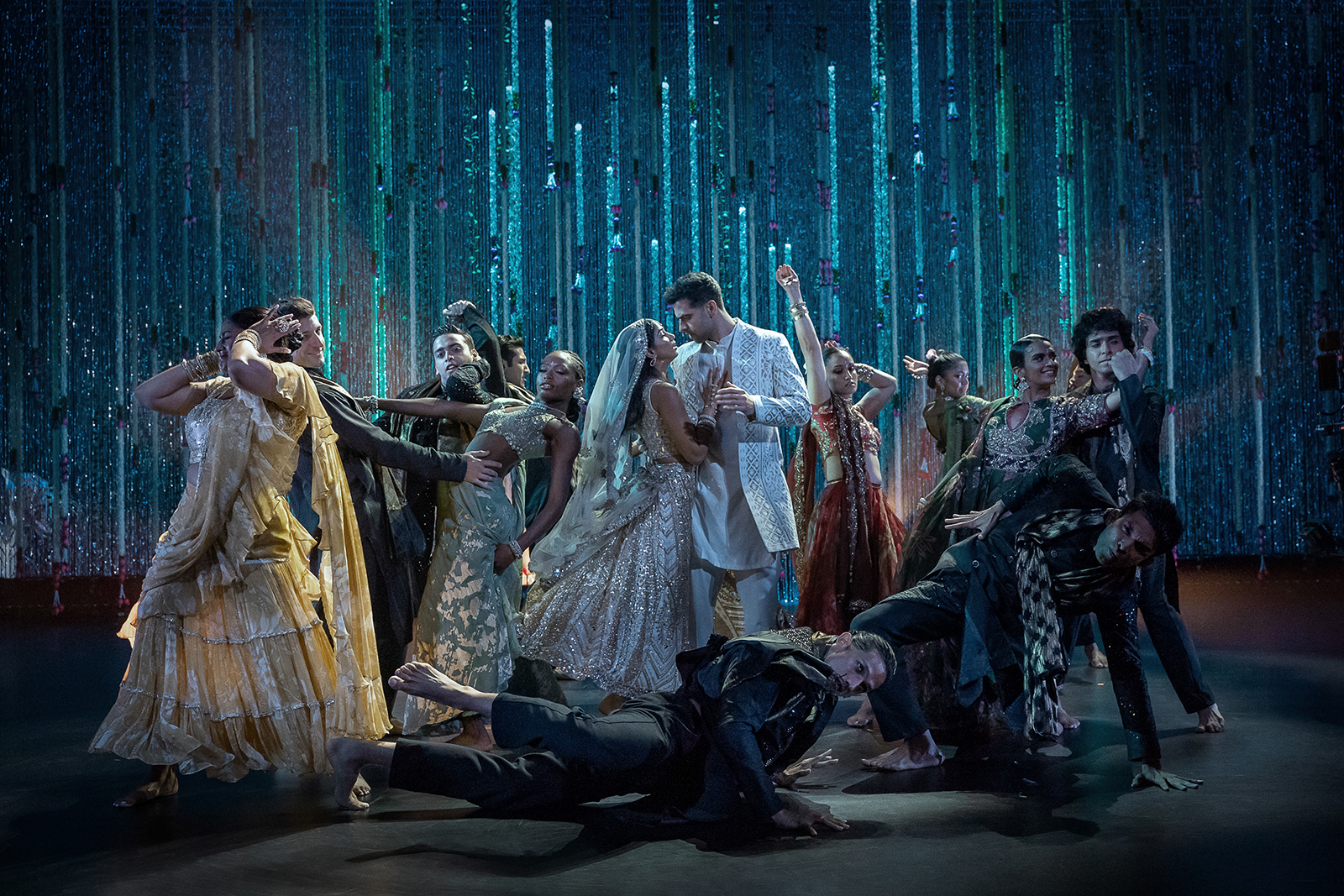
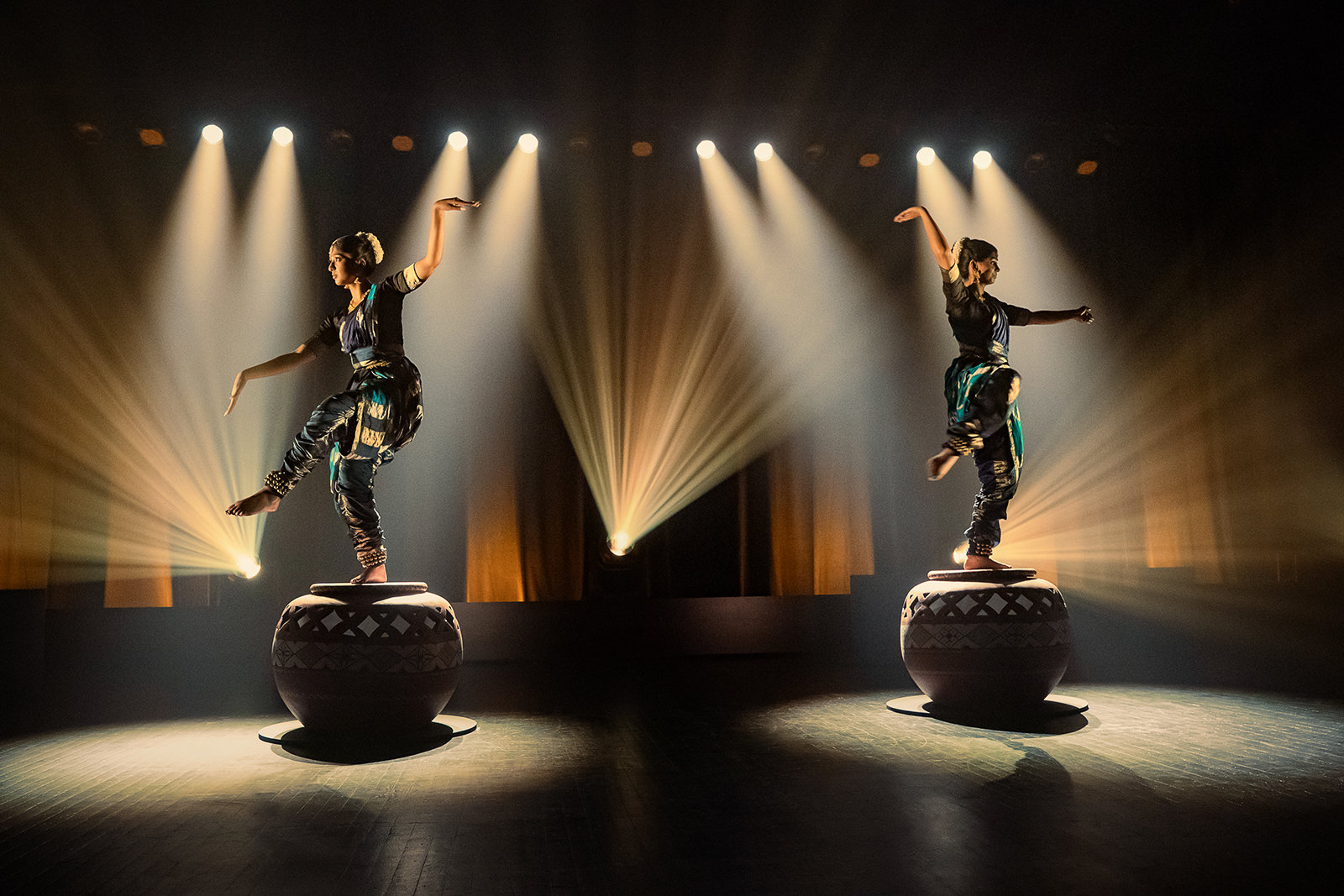
Well, a lot of the dancing sequences were done with songs, though, which were mostly with the music supervisor, Kier Lehman, and his team. So there were a few that I had to segue in and out of or enhance some of the transitions, but the bulk of my work was more on the score, on the emotional side and the comedy for timing.
The choreography was done very early because a lot of them had to dance to those songs. So some of the songs in the film, at least early versions of those songs, were written in pre-production so that they could actually have a temp track to dance to.
Knowing the songs in advance, was that helpful for you, knowing the sound of the film?
Absolutely. I think that’s one of those things that you always have to think of as a whole in a movie like this that is so music-heavy. There are dancing sequences, there are songs that are just there in different moments, like montages. So even before a score comes in, the movie already has a ton of music.
When it comes to the score, one of the things that we had to be very careful about is that the score didn’t detract from everything that the songs were doing. In storytelling, you need dynamics. You need things to have the ebbs and flows and to have the highs and the lows so that whenever a song comes in, it feels exciting again.
If you keep your audience at the same level the whole time, you lose perspective. So it was an important thing with the score to serve that purpose. It’s not only to help the story and the emotion, but also be a break in between songs in a way, but obviously maintain the overall tone of the film because it needs to be cohesive.
That’s why the score is not so beat-heavy. It’s not so crazy energetic unless it really needs to be in a couple scenes. The majority of it is a little bit more tamed and it pulls on more of the emotion and sits under so that, as soon as another song comes in, you really feel the excitement and it feels vibrant again.
Best of the Best. (L to R) Priyanka Kedia as Anjali, Ankur Rathee as Ronak, Tanishq Joshi as Vishal, Amryn Khurana as Sumi in Best of the Best. Cr. Emily V. Aragones/Netflix © 2026
Reading the script for the first time, what were some of your initial instincts?
To me, reading the script, when it comes to score, you’re always trying to find: What is this movie about? What’s going to be the heart of the score? This movie, in main themes, I would say, is about friendship more than anything. It’s about things that happen with friends, old friends, new friends, and also the experience of a first-time something. In this case, your first day in college.
That kind of mix of emotion between the excitement of jumping into something new, but also a bit of that nostalgia and sadness that you’re leaving behind your whole life, basically. I had to tap back into that. It’s been 20 years since I was in college, but I wanted to tap into that feeling. It was so exciting, but at the same time, you’re so young and everything you’ve known your whole life so far, you’re leaving behind to go on this new adventure.
When you thought about and looked back at those emotions of going to school, how did you place, “Okay, this is the feeling I can pinpoint. What instrument best supports these feelings?”
A lot of it is trial and error, both because sometimes you need to see it and live with it for a little bit before you realize if it’s right or wrong, but also because film is a collaborative thing. At the end of the day, your director, producers, and the studio end up dictating, or at least guiding, a lot of what the music should be and what the instruments should be.
There are so many songs and a lot of the songs already capture the culture of the film, everything to do with Indian music and Indian American diaspora music. We wanted to make sure that the score wasn’t just full of tabla and bansuri and everything because it would’ve felt a little out of place, especially because the songs are so important and they take so much of the main character of the music.
We wanted to make sure the score felt more to the heartstrings of: What is it that we should be feeling here? What is it that the score needs to be supporting? So, back to instrumentation, there’s quite a bit of synths, but not synths in the way of…
[Laughs] John Carpenter.
[Laughs] John Carpenter in any way, but mellow synths. There’s guitar also, like acoustic guitar, some electric guitar, some strings, but not orchestral. We wanted to make sure it stayed minimal and contained. We definitely didn’t want a big orchestra. It didn’t feel like that. We wanted to make sure it almost felt a little indie in a way.
Yeah, more relatable.
Yeah, more close-miked and intimate.
It’s such a sports movie. Usually when you think of sports movies, you think of Chariots of Fire, Miracle–
Or Field of Dreams. Those big orchestral things.
But you knew that wasn’t needed from the beginning?
I think it was very clear early on, the way it was shot. In film, also, the cinematography and the editing affect so much how you feel the score needs to be. Even watching this movie with no music at all, it didn’t feel like a big orchestra movie. The way it’s shot, the way the story’s told, the close-ups, there’s a rawness to it that the score needed to be a little more contained and smaller in sound.
Even in the scenes that are more inspiring, like Maya’s speech at the end and the moments after the competitions and stuff like that, we still had to be very careful. We didn’t want it to feel massive. It could have created a distance between the audience and the film.
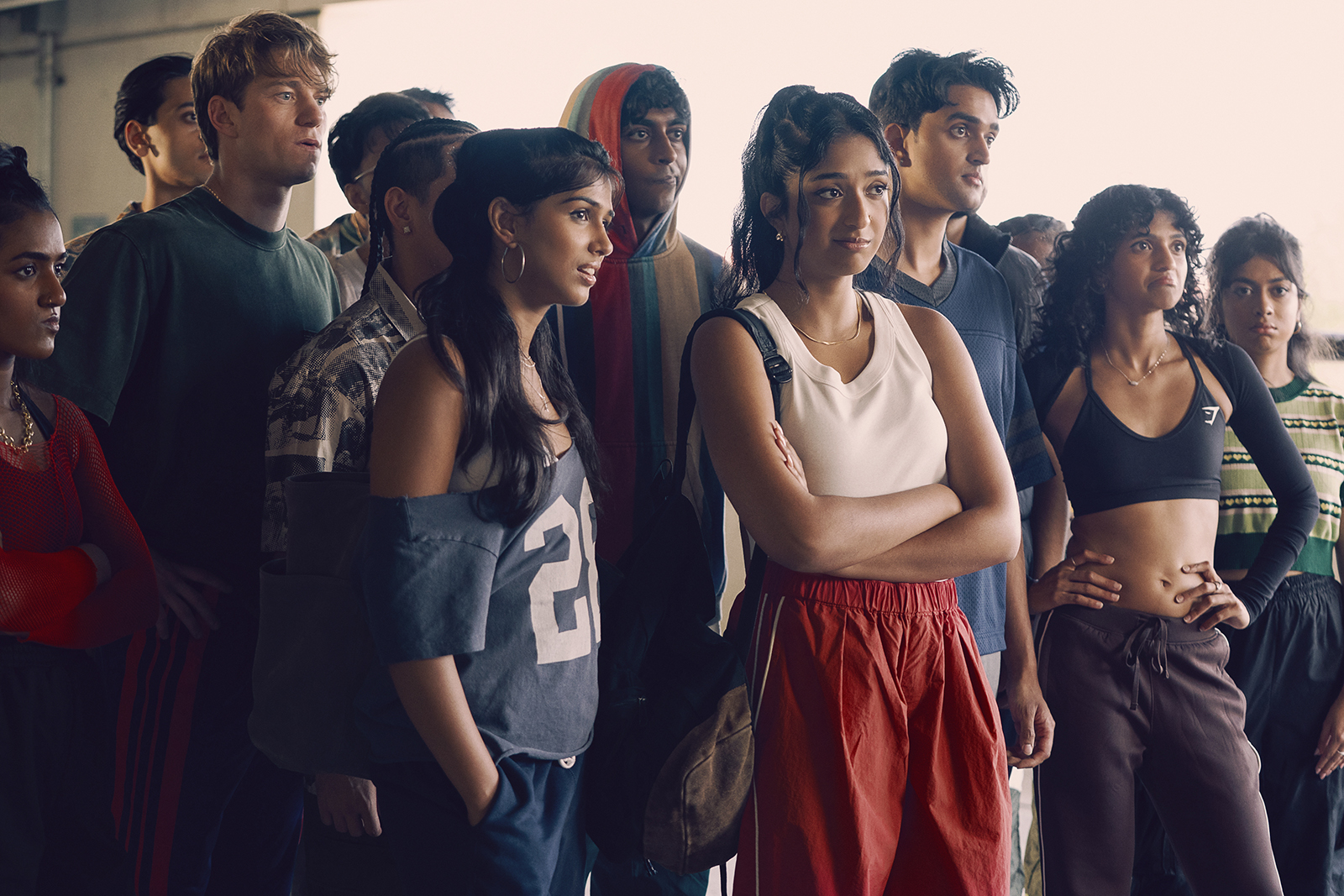
Best of the Best. (L to R) Nico Greetham as Harry, Priyanka Kedia as Anjali, Nihar Duvvuri as Nirbhay, Maitreyi Ramakrishnan as Maya in Best of the Best. Cr. Emily V. Aragones/Netflix © 2026
When you’re working on a project like this, do you listen to other film scores?
I normally don’t, to be honest. I would be afraid that it would influence me in a direction where I’m no longer responding to the film. I’m responding to something that is outside of the film.
I try to stay, in general, aware of what the trends are. I watch TV shows. I go to the movies a lot with my wife all the time. I try to stay current with what’s happening, what people are gravitating towards, and to have a general idea of the sound of the moment.
Obviously, as any filmmaker, I’ve watched movies my whole life. I always pay attention to music since that’s my thing. So I think that is my education in scoring. When I’m working on a project of my own, I try to not focus on that, but just focus on the story that I’m working on. I think, inherently, some of those inspirations help me in a way.
What were the film scores for you growing up that were really inspiring?
Funny enough, they’re definitely not similar to this film, but as a kid, I was in awe of Jurassic Park, for example, or The Lion King. Those are some of my earliest memories. I’m a late ’80s kid, so all those early ’90s movies made a huge impact on me.
Even a movie like Home Alone. I feel like that music is very Christmasy and everything, but it makes you feel so much. There’s the excitement and the adventure and all of that. Early ’90s movies definitely had an impact on me wanting to pursue this career.
Obviously, I’m aware that that sound is not what’s current now and it’s not what we’re after, but I think it still influenced me in feeling in general.
What’s a theme in Best of the Best you really hope helps the audiences feel the emotion of the friendship?
Well, there’s a theme that I call the friendship theme, back to the friendship, that is quite simple. It’s played on a synth, but it almost sounds like an electric piano in a way, and that’s all over the place.
It’s very early on when they’re first having a little chat in bed. Early in the film, it’s kind of hinted. Then every time that something is happening between the main two leads, I try to find a way to hint at that theme because then it guides us all the way towards the end. When the friendship is more important and it takes more of a main focus, then we get to hear the full theme.
I think that’s something, again, it’s not a theme in the way that Jurassic Park is a theme, so it’s not something that you’re going to sing necessarily, but it’s thematic material that is in many places in the film that I think definitely gives it cohesion. By the time you end the film, hopefully, it all feels like one piece. It resolved something.
Best of the Best. (L to R) Maitreyi Ramakrishnan as Maya, Priyanka Kedia as Anjali in Best of the Best. Cr. Emily V. Aragones/Netflix © 2026
This movie is a celebration of not just dance, but music, so how much did that inspire you while working on it?
Some of my favorite projects are like this, obviously being a musician. As soon as I heard of this opportunity, I was interested in it. That marriage between song and score is one of my favorite things to do. I love responding to what the songs are doing and seeing the songs as a whole. So not just as a single, but: What is this song doing here? What is the song doing here?
Trying to find a way to make the score almost like a puzzle because the score needs to guide you through all those things subconsciously, or at least that’s how I feel in movies that are so heavy on songs. The songs are not related to each other necessarily. Here, the music in this movie, either Indian or Indian American or, in general, have that sound of the Bollywood collegiate dance world, but they’re written by a bunch of different people.
So I think, for me, as the kind of overall original music person in charge of that, a lot of it was that puzzle of really understanding where all these songs are and trying to find ways that the score pieces them together in some way.
I just wanted to make sure I can get from point A to point B. What do we need? Then that’s my job. That’s where this music needs to be heading, or giving us a break from this, or leaving more space like we talked about early on. A lot of the time, that is the answer — not to overdo it, just to let it breathe. Taking that step back. I love doing that.