Picture Credits: Getty Images / Netflix
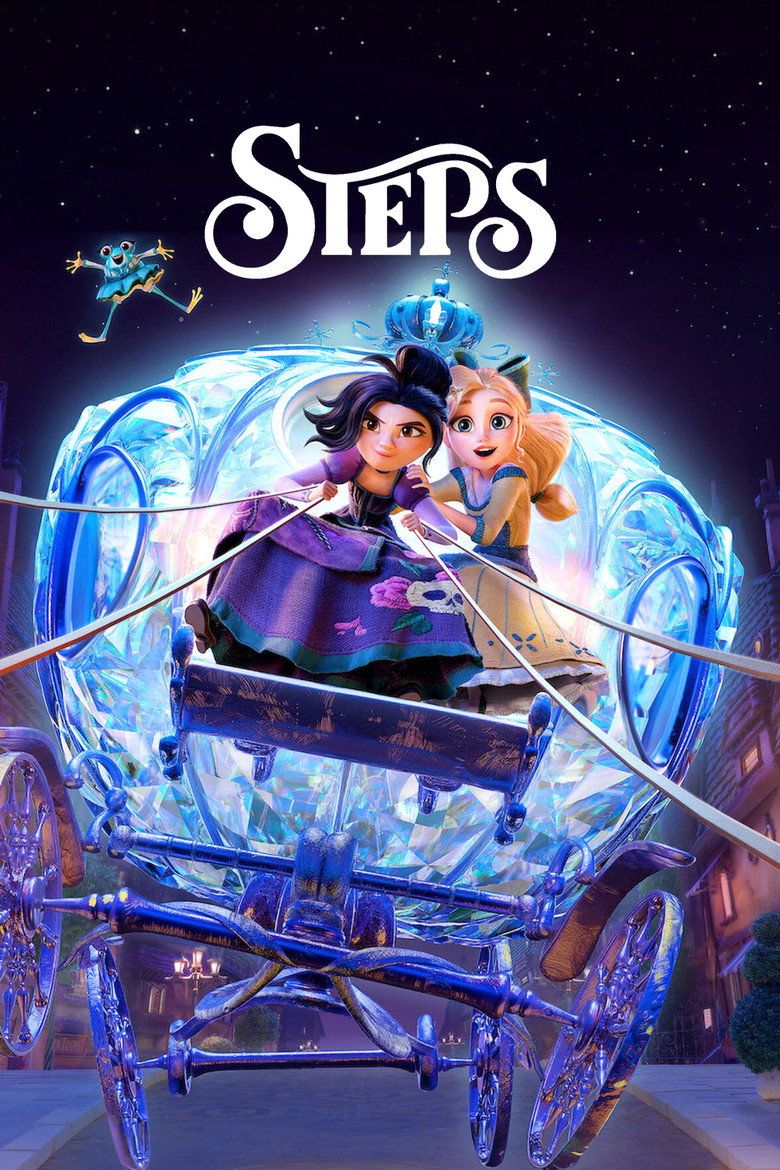
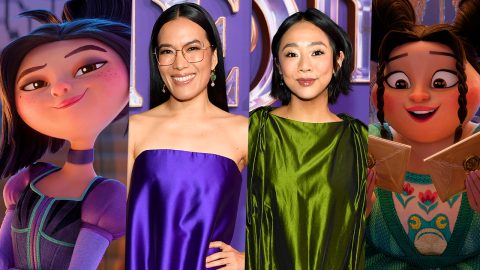
For animated features, everything is a collaborative effort: old school and new school collide, and both are still learning from each other. The same goes for Steps‘ directing duo: Alyce Tzue, a Student Academy Award gold medalist making her feature debut, and John Ripa, a longtime Disney story artist and co-director of Raya and the Last Dragon. Together they’ve created a Cinderella remix told from the point of view of the “evil stepsister” Lilith (Ali Wong) and her baby sister Margot (Stephanie Hsu), re-centering the tale on their relationship with Cinderella (Amanda Seyfried) and spinning it into a powerful story of privilege, acceptance, and sisterhood.
Reshaped from a musical into an adventure comedy across a lengthy five-year production, Netflix Animation Studios’ first in-house feature is finally here to cast its spell on Netflix.
We chatted with Alyce Tzue and John Ripa about their collaboration, reworking the story, and more.
What was the collaboration process like on this project?
Alyce Tzue: Well, I was extremely lucky to be able to work with John. He is so experienced, and he’s worked on iconic films that have shaped me as a person. So I really learned so much from John in terms of telling great stories: working backwards from the end, making sure you’re tracking emotional arcs, animation, storyboarding. It was truly a collaboration of shared values and complementary skills, and I was lucky and am still very grateful.
John Ripa: And all the same things back to Alyce. One of the special things for me, having been in this for as long as I have, is to still be learning and to have the opportunity to learn from Alyce, because she has incredible instincts, skills, storytelling, and heart. Learning from her has really been an honor on this. I’m excited to carry some of those things forward and continue growing myself. So yeah, it really is a nice back-and-forth of supporting each other, respect, and communication. I think we’re really proud of what we did together.
What were the challenges and rewards of transitioning the story from a musical into a character-focused story centered on the sisters?
Alyce Tzue: The first version was a musical, and we had wonderful music from Garfunkel and Oates. About a year and a half in, Netflix decided to take a different direction, and unfortunately, we weren’t working with Garfunkel and Oates anymore. We took a look at the story we had and felt like these larger-than-life characters would work better with needle-drop pop anthems. That fit our particular tone, which was very contemporary and at the same time a bit grounded in terms of fairytales. So the only person who breaks out into song is Cinderella, with Amanda Seyfried’s beautiful voice. For all of our other characters, needle drops just felt like the right tone for us.
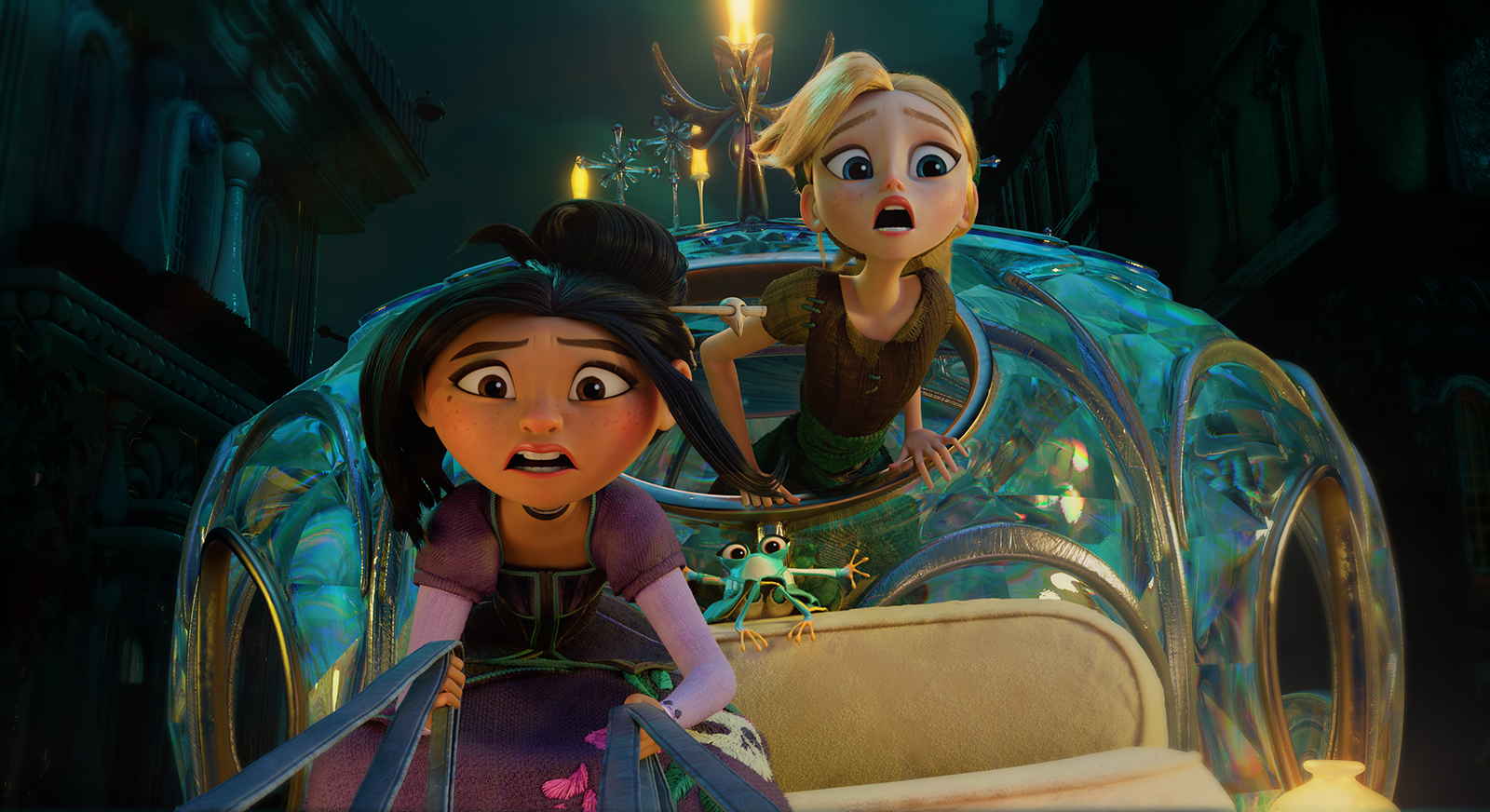
One of my favorite aspects of the film is how it highlights Lilith’s yearning for acceptance through her intimate solo moments. It feels so honest and true to anybody who is marginalized. What was it like to portray that?
Alyce Tzue: I think Lilith does represent my own experience growing up in a little town in Jersey that wasn’t very diverse. I was the only Asian kid in my class. As a kid, it’s kind of heartbreaking to feel so different that you think you’re not going to take the traditional path that everyone else might take. I just felt like I was going to have trouble finding that happiness, the happily ever after, that the other girls in my class would find.
Lilith goes on a similar arc. She comes in so hopeful, and then the world breaks her heart, and she has to go on this journey of love with her sisters to find that not only has the world rejected her, but she has also, in this place of heartbreak, left a part of herself behind. So maybe it’s therapy for me as well, reaching out to the little girl I used to be and saying, “You’re enough.” And of course, at the end, Lilith does find self-love.
John Ripa: Yeah. And just to add, because it was handled so sincerely, I think there are so many different ways that people feel othered, left out, or alone. It speaks to a lot of different situations, because it was told so sincerely and so truthfully.
I love how the film uses magic as a motif for privilege. What conversations did you have about that with the writers and with each other?
Alyce Tzue: That’s a really great question. That was an intention early on in this iteration, because you don’t necessarily see Cinderella as someone with privilege, but we wanted to challenge that view. She is the only one in the story who gets magic. So she goes on this arc of not knowing she has magic, kind of floating through life thinking a song can fix anything. Then she learns she has magic and has the time of her life. Then, at the ball, she loses her magic and realizes that a song can’t fix everything. She gets to know Lilith, who has never had magic, and learns about the struggles Lilith has gone through. At the same time, Lilith realizes that Cinderella, despite having magic, has gone through her own struggles. Ultimately, it is a deconstruction of privilege.
When you strip that away and try to equalize things more, we’re able to see each other’s humanity better. So there was a lot of conversation around magic as privilege, for sure.
How did you shape the dynamics between Cinderella, Lilith, and Margot, giving each of them a distinct role and arc, while making sure Margot’s absence, when she can’t be there anymore, pushes the other two toward that final emotional through line of seeing each other?
Alyce Tzue: Again, that’s a really great observation. Margot really is the one who is trying to keep them all together. So it was a conscious choice by us as storytellers to remove Margot from that at some point and let her become part of the stakes and part of the consequences of what has happened between them, so that they have to deal with each other themselves and ultimately learn to love each other in the end.
Steps and its soundtrack are now streaming on Netflix. For more, read our full review of Steps, our earlier interview with Tzue and Ripa at Annecy, and our conversations with the film’s cast and creatives: