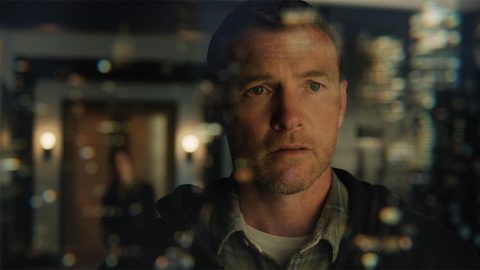
Picture Credit: Netflix / Vikash Patel
Black Rabbit is an immensely entertaining drama. The series sits quietly with its lead characters, the Friedkin brothers (played by Jude Law and Jason Bateman), but it’s that kind of patience that paves the way for a riveting pace. Black Rabbit is anxiety and patience coming together in the editing room.
That balance landed Vikash Patel an Emmy nomination for cutting the episode, “Isle of Joy.” Patel previously worked with Jason Bateman on Ozark, having cut 20 episodes of that hit Netflix series. With Black Rabbit, the two wanted to cut together a “frenetic, anxiety-ridden, propulsive series.”
Recently, the Emmy nominee spoke with What’s on Netflix about how Black Rabbit continued to turn up the heat in the kitchen.
You cut the premiere as well as the final two episodes. Knowing where the show was going, where the Friedkin brothers would wind up, how’d that influence how you cut the pilot?
Oh, that was absolutely huge. I hadn’t even read the final two scripts, , but Jason told me that his character commits suicide. An example of that was episode two when Jake and Vince are having the conversation after he’s had his finger cut off in the elevator and they’re in his apartment. I think Vince’s character says something, “Maybe I’ll just end it for both of us and I’ll take a gun or eat a bullet,” or whatever. There’s a line right near the end of the scene. And then Jake turns around and says, “Well, who’s going to clean up that mess?” And then we sit with Vince’s character, the thought of him taking a bullet, and deliberately, we stay on that shot for a significant amount of time.
Is it foreshadowing what’s coming at the end of the episode? Maybe people will catch that clue or a hint of it that he is this fragile character. But me knowing what the end was, I was like, oh, we can stay here and just have the score sit with that feeling of him potentially thinking that he would kill himself or he’s willing to kill himself.

Black Rabbit. (L to R) Jude Law as Jake, Jason Bateman as Vince in episode 108 of Black Rabbit. Cr. Courtesy of Netflix © 2025
Subtle foreshadowing. I also imagine delicate handling where if you added maybe just a few more frames lingering on that moment, audiences would watch on.
That’s right. It’s a lengthy, lengthy beat, and we sit with him contemplating that thought. It doesn’t immediately go anywhere, but as we start getting closer to the finale, you’re like, where’s this going? And then you get into episode eight and he’s having the conversation in the VIP room with his brother. And if you watch that scene back, there are some really subtle glances where he looks up. There’s a couple of them, while watching the film, I’m like, oh, Jason’s also doing it and I got to make sure I kind of clock this a little bit and just hint at it. But he knows the moment he walks into the Black Rabbit that it’s going to be over for him because he’s cornered and there’s no way out. I think at that moment when he walks in, he knows what he’s going to do.
In the pilot, how much did you need to say about the Friedkin brothers and the restaurant, The Black Rabbit?
I think a lot of it’s implied. In the first 10 minutes, you get a sense of the Black Rabbit, you get a sense of this really exciting venue. It’s got so much swagger to it. And then you see snippets of these characters. Really, the only character that you really get anchored to is Jake Friedkin. He’s giving the speech to all the people in the Black Rabbit and how successful it is, et cetera. And you get a sense of this establishment, but you don’t linger too much. It’s a broad stroke impression of this New York City establishment, which is bustling with life.
As we get through the series, you get a sense of the relationships and the characters. They’re naturally baked in and you get a sense of the friction between Jake and Vince. But you also, there’s this subtle thing that is also kind of resonating, which is they are connected by blood. Even though Vince as a character is a hot mess, Jake will still do anything for him because he is his brother. I think that is implied very subtly throughout the series. He bails him out so many times up until the end as well, and he’s still got his brother’s back.

Black Rabbit. Jason Bateman as Vince in episode 101 of Black Rabbit. Cr. Courtesy of Netflix © 2025
You got two great actors in Jude Law and Justin Bateman. How much did you want their silences to tell the story?
Huge, huge. They’re such wonderful actors that they give you several shades of the same color. You can modulate their performance. If you want something just a little bit darker, you’re going to find that in a shade of gray. If we’re looking at the color gray, they’ll give you seven different shades of that. It gives you room to modulate it and ratchet up the intensity or not.
It’s challenging, shall I say, as an editor when you have talent and actors who can work in that capacity. Whereas when you’re working with actors who are just not very good, you’re just looking for the best performance. But with someone like Jason and Jude, it is so subtle. It’s a subtle look. It’s a subtle change in tone of their reading, but they stay in the lane of their character. So my job as an editor is even more challenging really when you think about that.
But you’re also always questioning, is that Jude Law performing or is that Jake Friedkin? You’re always questioning that. You’re like, no, that’s right for that character in that moment. Because you can get enamored with his performance, with Jason’s performance, and you’re like, “Is that Jason Bateman acting or is that Vince Friedkin?” And you have to constantly remind yourself.
And that’s why I talk about all those colors. It’s extremely challenging working their performances. Jason’s the kind of actor who likes to keep a whole performance intact. When you build a scene, you stay in that same take as much as you can because he’s doing the arc of the scene and he’s doing the work for you. If you keep changing takes, you can see, oh wait, his performance is off here. One minute he was in this tone or he was emotionally here and the next moment he’s here. They don’t really gel. So you have to be very mindful of crafting their performances.
When the two brothers are together, where does your focus usually go? How do you decide whether a scene is a two-hander or one brother calls for more focus in a scene than the other?
It’s performance and point of view. Sometimes, whose scene is it? Is it information we’ve learned already so then we can see a different side and see the reaction played out all on say Jason, or is it worth having all the lines on camera with Jude? A great, great example is the scene which I talked about, which is where he’s had his finger cut off and he’s on the couch with Jake and Vince are on the couch talking.
A lot of that scene is played on Vince. We know all the information already because we’ve learned that in episode one regarding all the information about how much money he owes and all the drama that’s already unfolded. It’s great to sit with Vince as he processes all that information that we’re already privy to. So it’s a great question that you ask, but sometimes you’re looking at whose point of view it is.
Myself and Jason, we both love strong point of view cutting, which is dialogue played on the other person sometimes. It’s just you know whose point of view the scene we’re watching from.

Black Rabbit. (L to R) Jason Bateman as Vince, Jude Law as Jake in episode 108 of Black Rabbit. Cr. Courtesy of Netflix © 2025
The show turns up the tension very well. Whether in a chase scene or dialogue-heavy scene, how do you want to create anxiety and tension?
Well, first they were doing so much great work in terms of the ad-libbing. There’s so much ad-libbing that was done between both of them and some of the other actors as well. But mainly between Jason and Jude, they constantly, there’s so much ad-lib that you just kind of own that because they were talking all over each other. If you watch a Safdie brothers movie, Uncut Gems, Good Time, there’s a lot of dialogue stepping on each other. I think that was part of what they were doing in production on camera. Another thing that we did specifically, a great example I would say is the initial robbery in the pilot.
When the robbers came through the doors in the VIP room, what we did on the mix stage was let’s not protect dialogue. Let’s kind of have everything stepping on each other and have the music cranking at the same time. Everything’s fighting for each other. I think that in itself just gives a sense of anxiety. You can’t sustain that for too long because you need a break. But in that moment, it was the perfect example of, I remember going to the mix stage and Larry and Tim, our re-recording mixers, they had carved out all that dialogue.
So the score was sitting nicely and you could hear all the dialogue cleanly, et cetera. I said, “No, no, let’s do the opposite. Let’s ramp up this score. Let’s have everything fighting at the same time.” Jason loved it when he came in, and that’s the way we approached the series as well moving forward.
That’s so rare for television, too, that much ad-libbing. It’s streaming, of course, but did Black Rabbit feel more like cutting a movie than a TV show?
Absolutely. I think that’s Jason’s North Star and always his taste. You’re looking at an eight-hour movie. I didn’t actually think he was going to do any ad-libbing because the scripts were great in themselves. But when I started receiving dailies, it was like, oh wow, they’ve just gone off script here and they’re just kind of bantering like brothers. We welcomed it and it was great. When it works, it works. And as long as the scene doesn’t get derailed, we stuck with it. They’re pros, both Jason and Jude are pros.